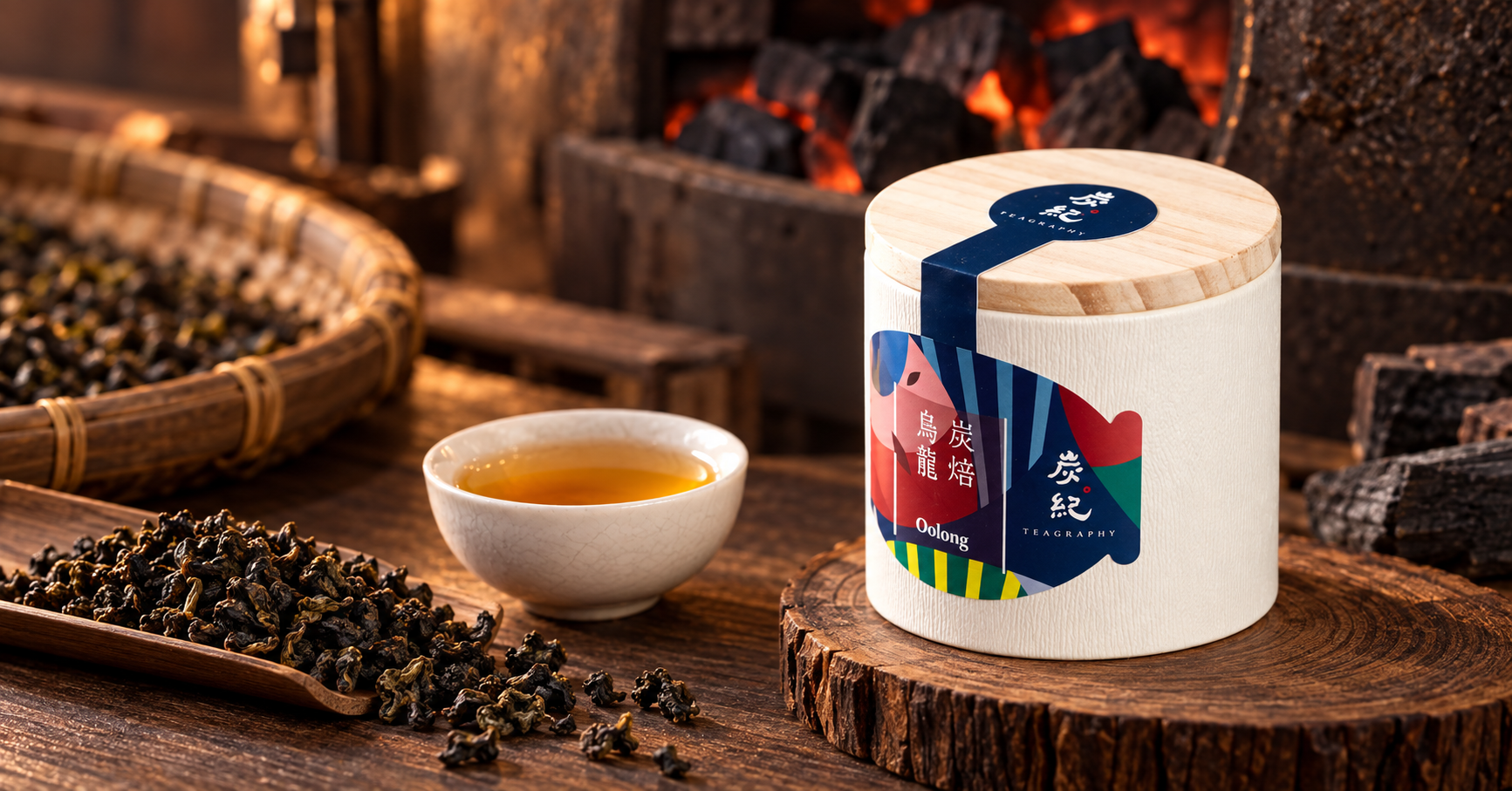
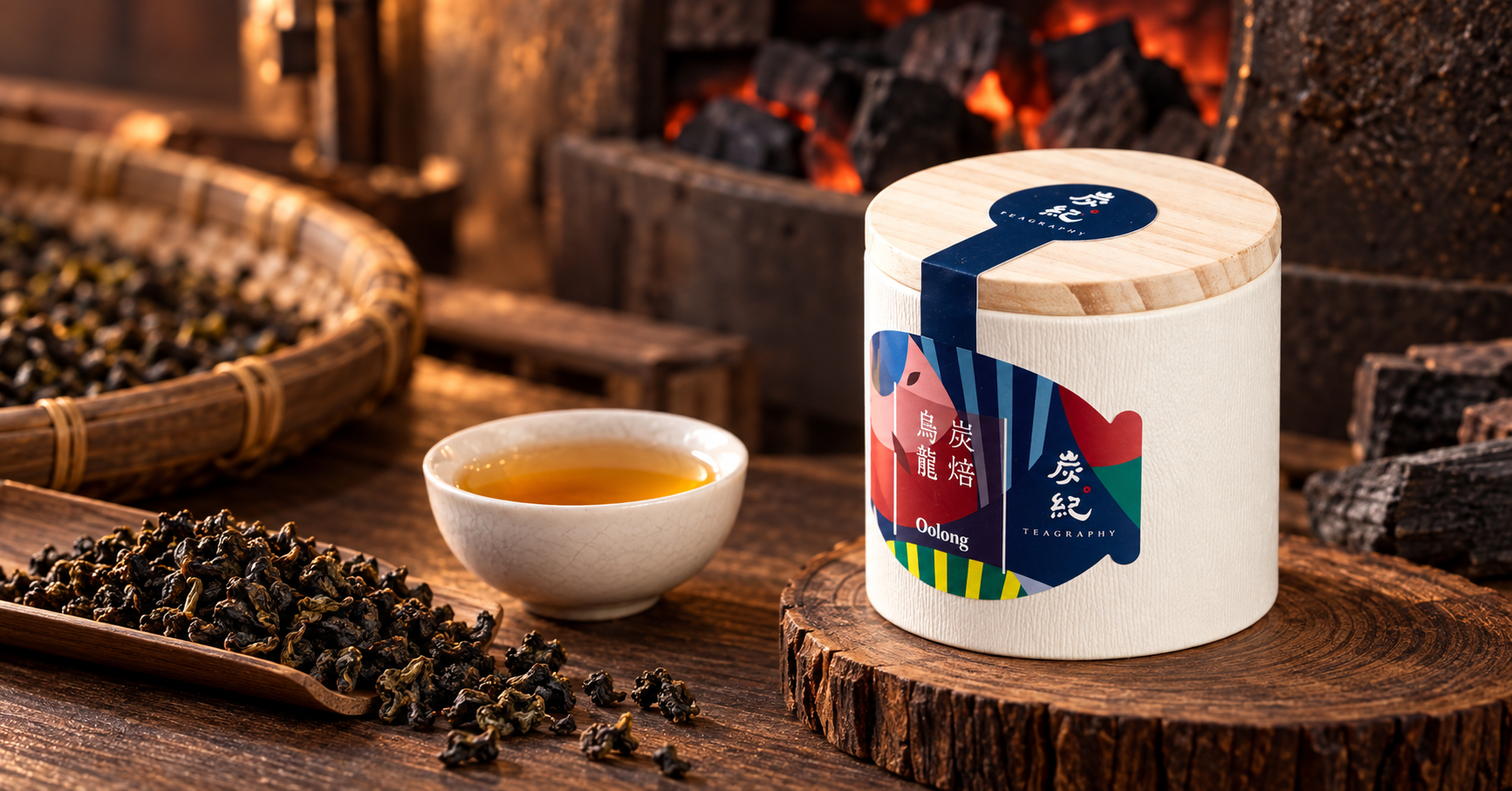
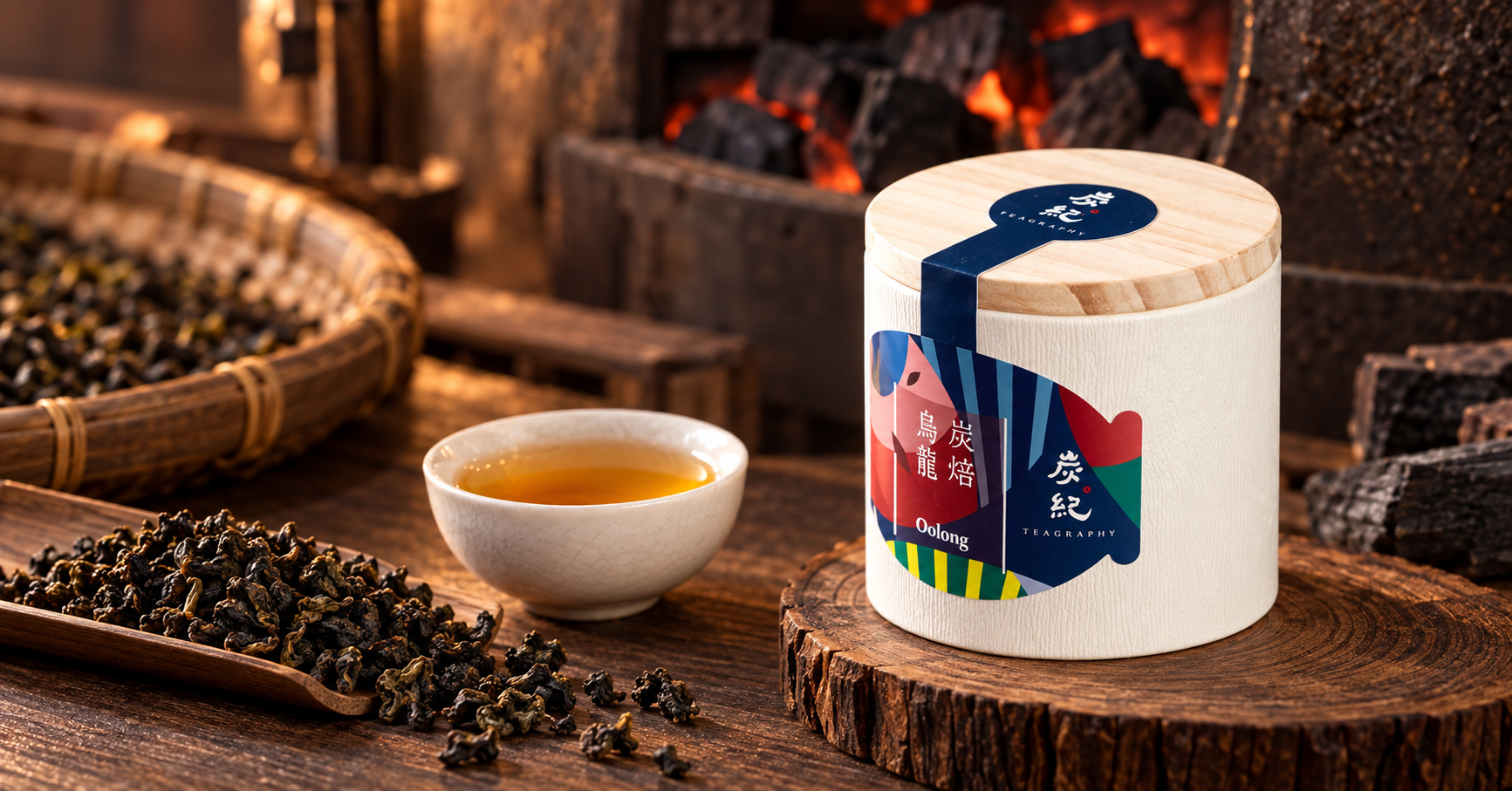
Charcoal-roasted oolong is Taiwanese oolong finished over a carefully managed charcoal fire so heat can move through the leaf slowly and evenly. At TEAGRAPHY, the fire is made with longan wood charcoal, and the roast is watched, adjusted and turned by hand. The goal is not a smoky flavour. It is a clear liquor, layered aroma and a warm, lingering finish that develops after the tea is swallowed.
This guide explains what charcoal roasting changes, how the process works, how to recognise a well-roasted tea and which TEAGRAPHY oolong to try first.
What is charcoal-roasted oolong tea?
Charcoal-roasted oolong begins as oolong tea, a partially oxidised tea whose fragrance and texture already depend on cultivar, growing place and tea-making skill. Roasting is a later stage. It lowers residual moisture, settles raw or grassy notes and develops a rounder, more integrated flavour.
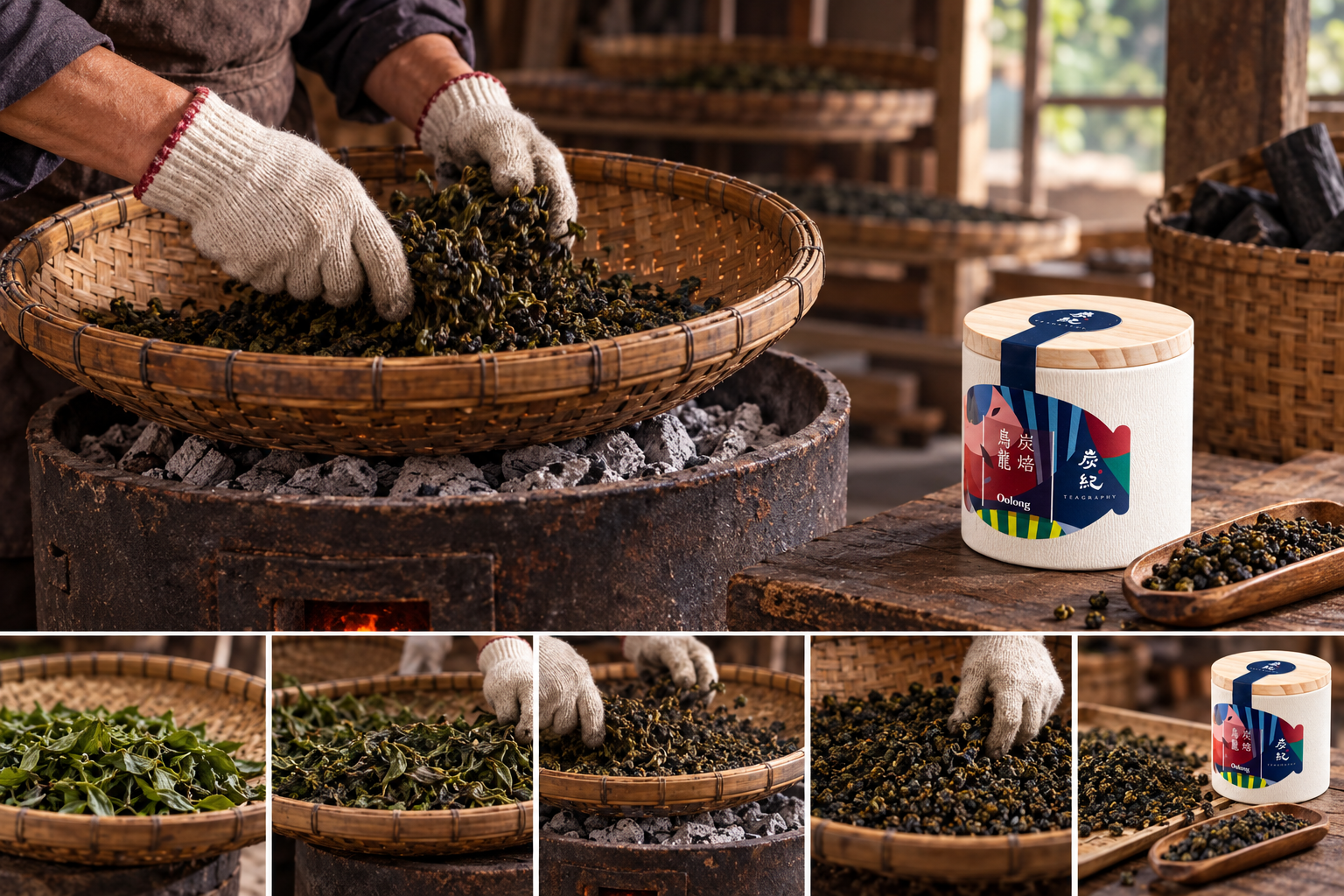
In a traditional charcoal roast, the heat source sits below a bamboo roasting basket. The leaves are never placed directly in flame. The roasting master first creates a stable charcoal bed, covers and levels it with ash, then controls the gentle radiant heat that reaches the tea above.
Why does TEAGRAPHY use longan wood charcoal?
Longan wood charcoal is part of the roasting tradition preserved by TEAGRAPHY in Nantou, Taiwan. When the fire is prepared correctly, it provides steady heat for the long watch required by a deep, even roast. The charcoal is not used to make the tea taste burnt. A successful roast allows the tea's own sweetness, body and fragrance to emerge in layers.
The difference is easiest to notice after drinking. The aroma may seem restrained above the cup, but it expands across the palate and returns in the finish. In the bottom of the empty cup, a gentle sweet-roasted note can remain.
How is charcoal-roasted tea made?
TEAGRAPHY's roasting process is slow because every stage affects the stability of the fire and the clarity of the final cup.
- Prepare and light the charcoal. Longan charcoal of the right size is selected, arranged in the roasting stove and lit.
- Pack the charcoal bed. As the charcoal burns through, it is added in batches and packed firmly so the bed remains stable.
- Cover and level the ash. Ash is spread over the glowing charcoal with no gaps or open flame. This moderates the heat.
- Place the tea in bamboo baskets. A basket holds no more than 10 catties, about 6 kilograms, so the leaves can heat evenly.
- Keep watch and turn the leaves. The roasting master turns the tea at least once an hour. A basket may roast for 3 to more than 10 hours depending on the leaf and intended result.
Because leaf condition, temperature and humidity change, the process cannot be reduced to one fixed timer. The tea maker judges the heat, aroma and feel of the leaf throughout the roast.
Charcoal roasting and electric roasting
Both methods can roast tea, but they transfer heat differently. Electric roasting generally moves hot air across the surface of the leaf. Charcoal roasting relies more on penetrating radiant heat. TEAGRAPHY uses the latter to reach moisture within the stem and leaf gradually.
This difference does not mean that every dark tea is charcoal-roasted or that a strong smoky smell proves authenticity. Colour alone is not enough. Look at the spent leaf, liquor clarity, dryness and the shape of the finish together.
How can you recognise charcoal-roasted tea?
1. The spent leaf remains resilient
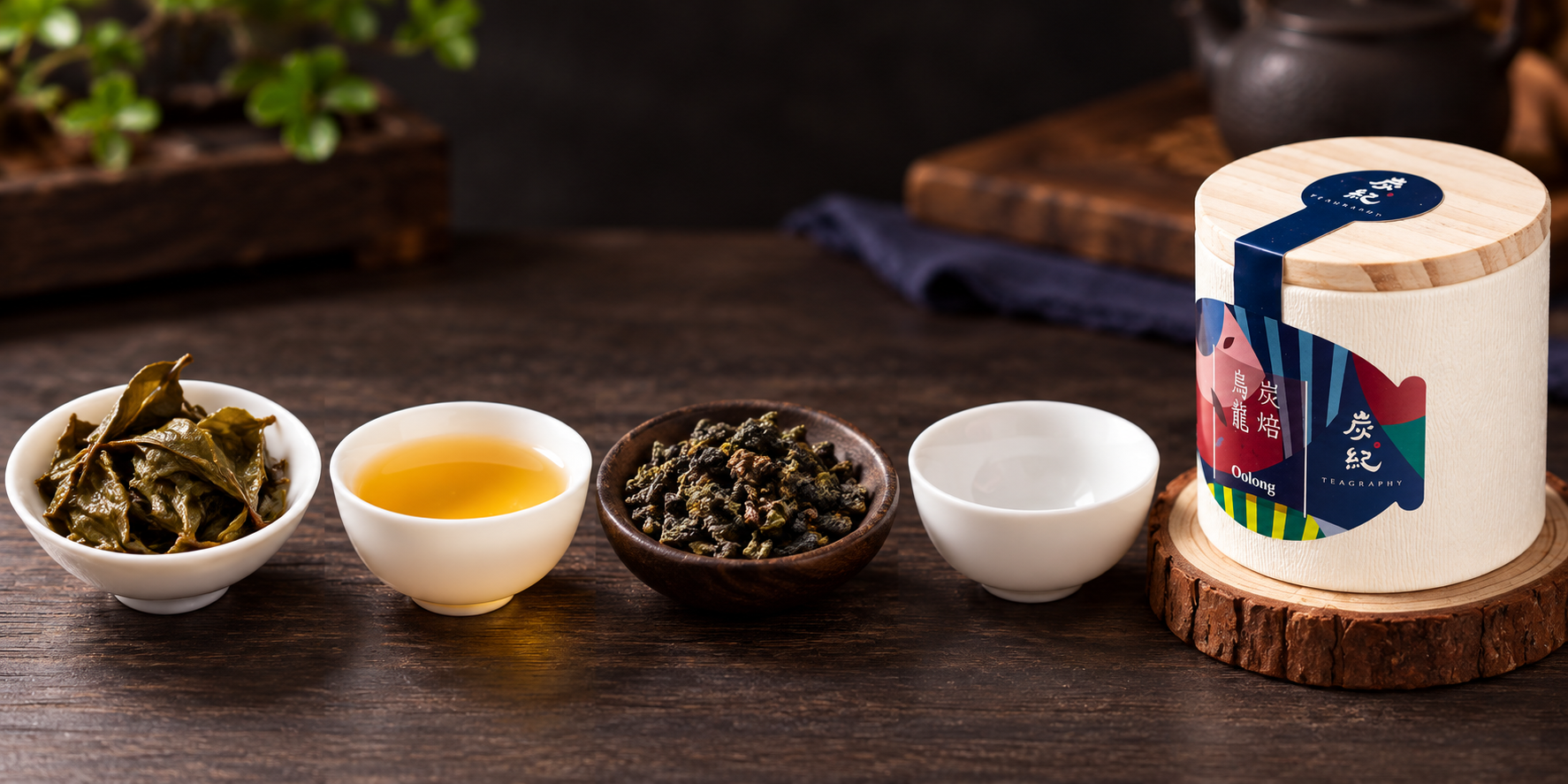
After brewing, a properly roasted leaf should feel soft and springy rather than brittle. It should resist tearing when gently pulled. That resilience suggests that the heat was controlled without scorching the leaf.
2. The liquor looks bright and clear
Penetrating heat helps drive moisture and unwanted notes from within the leaf and stem. In the cup, look for a clean, luminous liquor rather than judging by darkness alone.
3. The dry leaf feels genuinely dry
Roasting lowers moisture for better stability. The leaves should feel dry and well finished, without dampness or a stale odour. Store them sealed away from heat, humidity and strong smells after opening.
4. The flavour unfolds after the sip
Well-made charcoal-roasted oolong should not taste like ash. Its fragrance can be quiet at first, then open into layers across the palate with a sweet, warm and lasting finish.
What does charcoal-roasted oolong taste like?
The answer depends on the cultivar and roast. TEAGRAPHY's Four Seasons Tea Gathering Charcoal-Roasted Oolong is the deepest-roasted expression in the series, with a pronounced roasted fragrance and a full, lingering throat feel. Other teas in the series use the same craft to frame different natural characters: floral Four Seasons Spring, softly milky Jin Xuan and fruit-toned Red Oolong.
If you want to compare several expressions side by side, the Four Seasons Tea Gathering gift box brings the four profiles together in one set.
How should you brew it?
Use freshly boiled water and adjust the leaf-to-water ratio to the product format. For the 50 g loose-leaf cans, a compact teapot method lets the leaves open over several short infusions. For a larger cup or sachet, use more water and a longer steep. The product page gives the most reliable starting point for each tea.
For a complete method, read what temperature to brew tea at, then explore TEAGRAPHY's full charcoal-roasting craft.
Choosing an authentic charcoal-roasted tea
Choose a producer that explains the heat source, process and origin instead of relying only on the word “roasted.” Look for product-specific brewing guidance and accessible test information. TEAGRAPHY connects its teas to the craft preserved by Longhui Tea House in Nantou and publishes independent test reports for shoppers who want to check the details.
Charcoal-roasted oolong rewards attention, but it does not require ceremony. Start with clear hot water, give the rolled leaves room to open and notice what remains after each sip. That returning sweetness and layered finish are where the quiet work of the fire becomes visible.